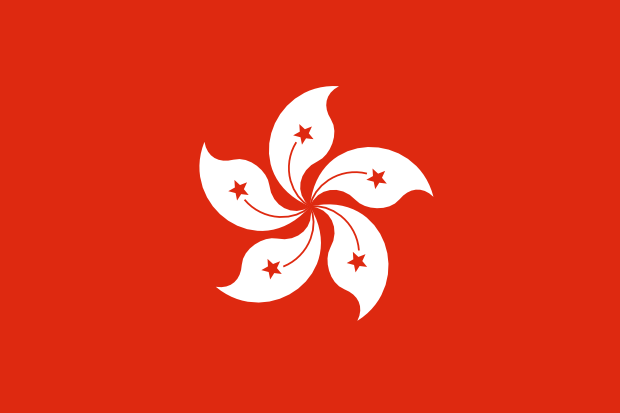
Hong Kong

Country flag available in this resolutions
| Icon 32x21 | ![]() |
| Icon x | ![]() |
Hong Kong
Hong Kong, a vibrant and dynamic Special Administrative Region of China, stands as a testament to resilience, economic prowess, and cultural fusion. Nestled on China’s southern coast, this bustling metropolis has evolved from a humble fishing village into one of the world’s leading financial centres, celebrated for its unique blend of Eastern traditions and Western influences. Its distinctive political status, „One Country, Two Systems,“ allows it a high degree of autonomy, shaping its singular trajectory on the global stage.
Geographically, Hong Kong is strategically located at the mouth of the Pearl River Delta, encompassing Hong Kong Island, the Kowloon Peninsula, the New Territories, and over 200 outlying islands. Despite its small land area of approximately 1,106 square kilometres, its landscape is remarkably diverse, dominated by rolling hills and mountains. The iconic Victoria Harbour, a deep natural harbour, has historically been its lifeline, facilitating trade and cementing its status as a maritime gateway. The climate is subtropical, characterized by hot, humid summers and mild, dry winters, often influenced by monsoons.
Hong Kong’s history is a compelling narrative of colonial expansion and economic transformation. Its modern story began in 1842 when Hong Kong Island was ceded to Britain after the First Opium War, followed by the acquisition of the Kowloon Peninsula and a 99-year lease over the New Territories. Under British rule, it rapidly developed into a vital entrepôt. Post-war, Hong Kong experienced an economic miracle, transitioning from a manufacturing powerhouse to a global financial and service-oriented economy. This era culminated in the historic handover to China on July 1, 1997, under the principle of „One Country, Two Systems,“ preserving its capitalist system and distinct way of life for 50 years.
Demographically, Hong Kong is one of the most densely populated places on Earth, with approximately 7.5 million people. The vast majority are ethnically Chinese, primarily Cantonese-speaking, but the city also hosts a significant expatriate community, contributing to its cosmopolitan character. Cantonese and English are the official languages, though Mandarin is increasingly spoken due to closer ties with mainland China. This high population density, combined with limited land, has led to some of the world’s most expensive and smallest housing units, a persistent social challenge, alongside an aging population.
Economically, Hong Kong operates as a quintessential free-market economy, consistently ranked among the freest in the world. Its pillars include financial services, trade and logistics, tourism, and professional services. The Hong Kong Dollar (HKD) is pegged to the US Dollar, providing stability, and the city boasts a low and simple tax regime, a robust legal system, and efficient infrastructure. It serves as a major gateway for foreign direct investment into mainland China and a critical offshore renminbi hub. Despite its successes, Hong Kong faces challenges such as increasing regional competition and the need for economic diversification.
The political landscape of Hong Kong is defined by the „One Country, Two Systems“ framework, enshrined in its mini-constitution, the Basic Law. This framework grants Hong Kong a high degree of autonomy, including its own currency, customs territory, legal system based on common law, and civil liberties, with China retaining responsibility for defence and foreign affairs. However, recent years have seen growing political tensions, particularly concerning democratic reforms and the interpretation of the Basic Law. Events like the 2019 protests and the subsequent implementation of the National Security Law in 2020 have raised international concerns about the erosion of Hong Kong’s autonomy and fundamental freedoms, leading to a complex and evolving political environment.
Culturally, Hong Kong is a fascinating kaleidoscope where Eastern traditions meet Western modernity. Its culinary scene is world-renowned, offering everything from Michelin-starred restaurants to bustling street food stalls, with dim sum being a quintessential experience. Traditional Chinese festivals like the Lunar New Year are celebrated alongside Western holidays, reflecting its multicultural fabric. The city’s fast-paced lifestyle, strong work ethic, and consumer-driven society are distinctive, yet strong community bonds and family values persist. Art, film, and fashion scenes thrive, contributing to its vibrant cultural identity.
Looking ahead, Hong Kong faces a future filled with both promise and significant challenges. Its strategic location, robust financial infrastructure, and skilled workforce position it well to continue playing a crucial role in global finance and trade, particularly within the context of the Greater Bay Area development. However, balancing its unique autonomous status with the increasing influence of mainland China, navigating geopolitical shifts, and addressing internal social issues like housing inequality will be critical. Hong Kong’s ability to adapt, innovate, and uphold its foundational principles will determine its long-term trajectory as a truly global city.
Information about country Hong Kong
Automated text translation, excuse errors, please!
Informations are from the publication CIA The World Factbook.
Country Hong Kong is situated in a location / continent East Asia. Hong Kong has an area of 1 104 km2 and 7 153 519 residents. The highest point has a height 958 above sea level. and it is called Tai Mo Shan. The lowest point is located at the level of 0 above sea level and it is named South China Sea. Hong Kong has the international abbreviation HK.
Hong Kong - economy
Total gross domestic product (GDP) is 355 600 000 000 $. Total gross domestic product per capita in purchasing power parity is 49 800 $. GDP grows by 5.00 % a year. Inflation (consumer price index) is equal to 5.30 % a year. Hong Kong have 3 703 000 working-age population (from a total population 7 153 519 people). Unemployment is at 3.40 %. The public debt of the country is 30.10 % GDP. The total amount of foreign debt is 903 200 000 000 USD.
Hong Kong - transport and telecommunications
Hong Kong has 2 067 km of roads and 2 airports. There is registered 1 644 ships.
Number of active mobile phones (sim card) in the country Hong Kong is 14 931 000. Number of active fixed telephone lines is 4 348 000. Hong Kong has 4 873 000 internet users, who have the available 861 516 Internet connections. Hong Kong has been assigned a domain first Choose range .hk.
Hong Kong - demography
As suggested above, Hong Kong has 7 153 519 people. Population growth is in the amount 0.42 % per year. Number of children born per 1000 population per year is 7.54.Every mother has average 1.09 children. The infant mortality rate is 2.90 .Average estimated life expectancy makes 82.12 years. Mortality is 7.23 people per 1000 population per year.
Hong Kong - energetics
Hong Kong consumes a year 43 140 000 000 kWh of electricity. Annual electricity production is 41 220 000 000 kWh in power plants with a total installed electrical capacity 12 620 000 kW. Hong Kong exports 2 750 000 000 kWh and imports 10 750 000 000 kWh of electricity per year Energy mix of power generation is as follows: fossil fuels: 100 %, nuclear energy: 0 %, renewable: 0.0 %, hydropower: 0.0 %.
Flags of the world countries
World flags
World countries flags

Dále doporučujeme:
Tipy na Partnerské webyNaše tipy na zajímavé stránky
Linky na partnerské weby
Tipy na zajímavé weby
Odkazy na zajímavé weby
![]() |
![]() |
![]() |
![]() |
![]() |
![]() |
![]() |
![]() |
![]() |
![]() |
![]() |
![]() |
![]() |
![]() |
![]() |
![]() |
![]() |
![]() |
![]() |