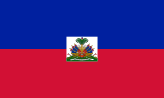
Haiti

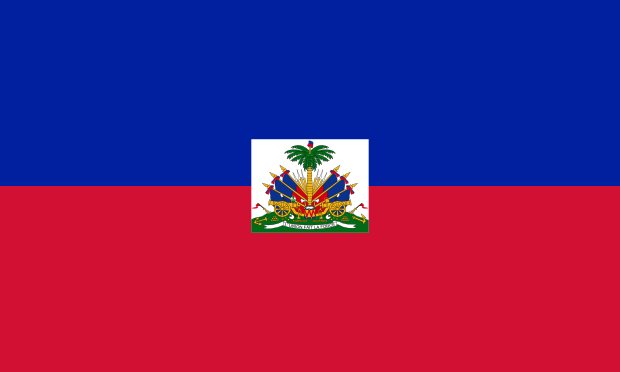
Country flag available in this resolutions
| Icon 32x19 | ![]() |
| Icon 88x53 | ![]() |
Haiti
Haiti, a nation nestled in the Caribbean Sea, occupies the western third of the island of Hispaniola, sharing its eastern border with the Dominican Republic. It stands as a land of profound paradoxes, a testament to both extraordinary human resilience and enduring systemic challenges. It holds the unique distinction of being the world’s first independent black republic and the only nation born from a successful slave revolt, a narrative that has indelibly shaped its identity and trajectory since its declaration of independence in 1804.
From a geographical perspective, Haiti is characterized by a rugged, mountainous terrain, with peaks like Pic la Selle soaring over 2,600 meters. Approximately two-thirds of the country is mountainous, creating diverse microclimates but also contributing to significant erosion and vulnerability to natural disasters. Its coastline is dotted with numerous bays, lagoons, and small islands, including Île de la Gonâve, the largest. The climate is predominantly tropical, with two rainy seasons, making it susceptible to hurricanes and tropical storms, which frequently devastate its fragile infrastructure and agricultural sector. Deforestation, a critical environmental issue, has exacerbated soil erosion and desertification, further compromising agricultural productivity and increasing the impact of heavy rainfall.
Haiti’s history is as rich as it is tumultuous. Prior to European arrival, the island was inhabited by the Taíno people, who called it Ayiti, meaning „land of high mountains.“ Christopher Columbus landed on Hispaniola in 1492, initiating Spanish colonization, which led to the rapid decimation of the indigenous population. In the late 17th century, the western part of the island, then known as Saint-Domingue, was ceded to France. Under French rule, Saint-Domingue became the wealthiest colony in the world, thriving on a brutal system of chattel slavery that fueled its sugar and coffee plantations. The vast majority of its population were enslaved Africans, living under horrific conditions. This oppressive system eventually ignited the Haitian Revolution (1791-1804), a monumental uprising led by figures like Toussaint Louverture and Jean-Jacques Dessalines. The successful revolution, culminating in independence on January 1, 1804, sent shockwaves across the globe, inspiring enslaved people and terrifying colonial powers. However, this triumph came at a steep price: Haiti faced international isolation, crippling debt imposed by France for lost property (enslaved people), and a legacy of internal strife and external interference that continues to plague the nation. The 20th century saw periods of U.S. occupation, a brutal dictatorship under the Duvaliers (Papa Doc and Baby Doc), and repeated attempts at establishing democracy, often disrupted by coups, political instability, and natural calamities, including the devastating 2010 earthquake.
The demographic landscape of Haiti is distinctive. With an estimated population of over 11 million people within a relatively small land area, Haiti is one of the most densely populated countries in the Western Hemisphere. The vast majority of Haitians (approximately 95%) are of African descent, with a small minority of mixed-race and European ancestry. Haitian Creole (Kreyl Ayisyen) and French are the two official languages, with Creole being the mother tongue for virtually all Haitians and French primarily used in government, education, and business. Catholicism is the dominant religion, but a significant portion of the population also practices Vodou, an indigenous religion that blends West African spiritual traditions with Catholic elements, often practiced concurrently with Christianity. Urbanization has been a growing trend, with a substantial portion of the population residing in the capital, Port-au-Prince, and its surrounding areas, leading to challenges in infrastructure and service provision. A large Haitian diaspora, particularly in the United States, Canada, and the Dominican Republic, plays a crucial role through remittances, which are a vital source of income for many families.
Haiti’s economy remains the poorest in the Western Hemisphere, characterized by widespread poverty, high unemployment, and significant income inequality. Approximately 60% of the population lives below the national poverty line. The economy is predominantly agricultural, with small-scale subsistence farming being the main activity for many. Key crops include coffee, mangoes, and sugarcane. The manufacturing sector is limited, primarily focusing on light assembly for export. The informal sector accounts for a large portion of economic activity. Remittances from the diaspora are a critical component of the national income, often exceeding foreign aid and direct foreign investment. Despite its vibrant culture and potential for tourism, political instability, lack of infrastructure, and security concerns have hindered the development of this sector. Haiti is heavily reliant on international aid and faces persistent challenges related to corruption, weak governance, and a lack of access to basic services such as clean water, sanitation, and electricity for a significant portion of its population.
In essence, Haiti is a nation of profound historical significance and immense cultural richness, a place where vibrant art, music, and a unique Creole identity thrive against a backdrop of complex and persistent challenges. Its future hinges on addressing deep-seated issues of governance, economic development, disaster preparedness, and social equity, all while harnessing the indomitable spirit and creativity of its people.
Information about country Haiti
Automated text translation, excuse errors, please!
Informations are from the publication CIA The World Factbook.
Country Haiti is situated in a location / continent Central America. Haiti has an area of 27 750 km2 and 9 801 664 residents. The highest point has a height 2 680 above sea level. and it is called Chaine de la Selle. The lowest point is located at the level of 0 above sea level and it is named Caribbean Sea. System of government is republic and the date of independence First January 1804. The capital city is Port-au-Prince. Haiti has the international abbreviation HA.
Haiti - economy
Total gross domestic product (GDP) is 12 520 000 000 $. Total gross domestic product per capita in purchasing power parity is 1 300 $. GDP grows by 5.60 % a year. Inflation (consumer price index) is equal to 8.50 % a year. Haiti have 4 810 000 working-age population (from a total population 9 801 664 people). Unemployment is at 40.60 %. Haiti issued 6.00 % GDP to healt care and 0,40 % GDP to army. The total amount of foreign debt is 665 100 000 USD.
Haiti - transport and telecommunications
Haiti has 4 160 km of roads and 14 airports.
Number of active mobile phones (sim card) in the country Haiti is 4 200 000. Number of active fixed telephone lines is 50 000. Haiti has 1 000 000 internet users, who have the available 541 Internet connections. Haiti has been assigned a domain first Choose range .ht.
Haiti - demography
As suggested above, Haiti has 9 801 664 people. Population growth is in the amount 0.89 % per year. Number of children born per 1000 population per year is 23.87.Every mother has average 2.98 children. The infant mortality rate is 52.44 and maternal mortality 350.00 deaths per 100,000 births. Average estimated life expectancy makes 62.51 years. Mortality is 8.10 people per 1000 population per year.
Haiti - energetics
Haiti consumes a year 309 000 000 kWh of electricity. Annual electricity production is 650 000 000 kWh in power plants with a total installed electrical capacity 240 000 kW. Haiti exports 0 kWh and imports 0 kWh of electricity per year Energy mix of power generation is as follows: fossil fuels: 74.2 %, nuclear energy: 0 %, renewable: 0.0 %, hydropower: 25.8 %.
Flags of the world countries
World flags
World countries flags
Dále doporučujeme:
Doporučené odkazy na zajímavé webyNaše tipy na zajímavé stránky
Odkazy nejen na naše partnerské weby
Doporučené odkazy a zdroje obsahu
Zajímavé internetové odkazy
![]() |
![]() |
![]() |
![]() |
![]() |
![]() |
![]() |
![]() |
![]() |
![]() |
![]() |
![]() |
![]() |
![]() |
![]() |
![]() |
![]() |
![]() |
![]() |