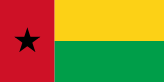
Guinea-Bissau

Country flag available in this resolutions
| Icon x |  |
| Icon x |  |
Guinea-Bissau
Guinea-Bissau, a small nation nestled on West Africa’s Atlantic coast, presents a compelling narrative of resilience amidst persistent challenges. Often overlooked, this former Portuguese colony is a land of vibrant cultures, diverse ecosystems, and a rich, albeit turbulent, history. Its unique geographical features, complex demographic tapestry, and a struggling yet hopeful economy collectively paint a picture of a country striving for stability and development. Despite its modest size, Guinea-Bissau embodies many of the broader struggles and aspirations of post-colonial African states, grappling with the legacies of its past while charting a course for its future.
Geographically, Guinea-Bissau is characterized by its low-lying coastal plains, extensive mangrove swamps, and a vast network of rivers that carve through the landscape, making inland travel challenging but providing fertile ground for agriculture. The country’s most striking feature is arguably the Bijagós Archipelago, a UNESCO Biosphere Reserve comprising over 88 islands and islets, known for its exceptional biodiversity, unique matriarchal societies, and pristine natural beauty. These islands are a critical habitat for marine life and migratory birds, offering significant potential for ecotourism, though largely undeveloped. The mainland is dominated by savannah and forests, enjoying a tropical climate with a distinct rainy season, which influences its agricultural cycles and supports a diverse array of flora and fauna. Its strategic coastal location and numerous waterways have historically made it a hub for trade, but also vulnerable to external influences.
The history of Guinea-Bissau is deeply intertwined with the broader narrative of West Africa and European colonialism. Before the arrival of the Portuguese in the 15th century, the region was part of the powerful Kaabu Empire, a Mandinka kingdom that flourished through trade and cultural exchange. Portuguese exploration led to the establishment of trading posts, primarily for the transatlantic slave trade, transforming the coastal areas into a key node in this brutal commerce. Full colonization, however, was slow and met with fierce resistance, with the interior only being brought under Portuguese control in the early 20th century. The struggle for independence gained momentum in the 1960s under the charismatic leadership of Amílcar Cabral, an agronomist and Marxist theoretician who founded the African Party for the Independence of Guinea and Cape Verde (PAIGC). Cabral’s sophisticated guerrilla warfare and political mobilization efforts made PAIGC one of Africa’s most successful liberation movements, achieving de facto control over much of the country before his assassination in 1973. Independence was formally declared in 1973 and recognized by Portugal in 1974 following the Carnation Revolution. The post-independence era has been marred by political instability, numerous coups, and civil unrest, hindering national development and democratic consolidation.
Demographically, Guinea-Bissau is a mosaic of ethnic groups, with the Balanta, Fula, Manjaca, Mandinka, and Papel being among the largest. This diversity contributes to a rich cultural tapestry but has also, at times, been a source of internal tensions. The official language is Portuguese, a legacy of colonial rule, but it is primarily spoken by the educated elite. The lingua franca for the vast majority of the population is Kriol, a Portuguese-based creole language, which serves as a powerful symbol of national identity and cultural fusion. Numerous indigenous African languages are also spoken across different communities. The population, estimated at around 2 million, is predominantly young, with a significant portion residing in rural areas, though urbanization is slowly increasing. Religious practices are varied, encompassing indigenous African beliefs, Islam (practiced by a substantial minority, particularly in the north and east), and Christianity (mostly Catholicism, concentrated in urban areas and coastal regions), often coexisting and blending in unique syncretic forms.
Economically, Guinea-Bissau remains one of the world’s poorest countries, heavily reliant on a few key sectors. Agriculture forms the backbone of the economy, employing the vast majority of the workforce. Cashew nuts are by far the most important cash crop and the country’s primary export, making the economy highly vulnerable to fluctuations in global commodity prices. Fishing also plays a crucial role, with its rich Atlantic waters providing a significant source of protein and export revenue, though often exploited by foreign fleets. Other agricultural products include groundnuts, rice (a staple food), and palm oil. Despite its natural resource potential, including unexploited offshore oil reserves and bauxite, the country struggles with inadequate infrastructure, limited access to education and healthcare, and a lack of diversified industries. A significant challenge to economic development and good governance has been the pervasive issue of drug trafficking, particularly cocaine, which has destabilized institutions and diverted resources, earning the country the moniker „narco-state“ at various points. Efforts are underway to combat this issue and strengthen state institutions, but progress is slow and difficult.
The political landscape of Guinea-Bissau has been characterized by chronic instability since independence. The country has experienced more successful coups or attempted coups than almost any other nation in Africa, leading to a fragile democratic process and undermining investor confidence. This instability is often attributed to a weak rule of law, a powerful military with a history of political interference, and deep-seated corruption. International efforts have frequently focused on supporting democratic transitions, security sector reform, and institution-building, yet the cycle of political crises often re-emerges. Despite these profound challenges, there are ongoing efforts to consolidate democratic institutions, promote transparency, and foster sustainable development. The country’s resilient population, vibrant cultural heritage, and untapped natural potential offer a glimmer of hope for a more stable and prosperous future, provided that political will and international support can effectively address its foundational issues of governance and economic diversification.
Information about country Guinea-Bissau
Automated text translation, excuse errors, please!
Informations are from the publication CIA The World Factbook.
Country Guinea-Bissau is situated in a location / continent Africa. Guinea-Bissau has an area of 36 125 km2 and 1 628 603 residents. The highest point has a height 300 above sea level. and it is called bezejmenné místo v severní části země.. The lowest point is located at the level of 0 above sea level and it is named Atlantic Ocean. System of government is republic and the date of independence 24th September 1973. The capital city is Bissau. Guinea-Bissau has the international abbreviation PU.
Guinea-Bissau - economy
Total gross domestic product (GDP) is 1 950 000 000 $. Total gross domestic product per capita in purchasing power parity is 1 200 $. GDP grows by 5.30 % a year. Inflation (consumer price index) is equal to 5.00 % a year. Guinea-Bissau have 632 700 working-age population (from a total population 1 628 603 people). Guinea-Bissau issued 8.10 % GDP to healt care and 1,10 % GDP to army. The total amount of foreign debt is 1 095 000 000 USD.
Guinea-Bissau - transport and telecommunications
Guinea-Bissau has 3 455 km of roads and 8 airports.
Number of active mobile phones (sim card) in the country Guinea-Bissau is 401 900. Number of active fixed telephone lines is 5 000. Guinea-Bissau has 37 100 internet users, who have the available 86 Internet connections. Guinea-Bissau has been assigned a domain first Choose range .gw.
Guinea-Bissau - demography
As suggested above, Guinea-Bissau has 1 628 603 people. Population growth is in the amount 1.97 % per year. Number of children born per 1000 population per year is 34.72.Every mother has average 4.44 children. The infant mortality rate is 94.40 and maternal mortality 790.00 deaths per 100,000 births. Average estimated life expectancy makes 49.11 years. Mortality is 15.01 people per 1000 population per year.
Guinea-Bissau - energetics
Guinea-Bissau consumes a year 60 450 000 kWh of electricity. Annual electricity production is 65 000 000 kWh in power plants with a total installed electrical capacity 21 000 kW. Guinea-Bissau exports 0 kWh and imports 0 kWh of electricity per year Energy mix of power generation is as follows: fossil fuels: 100 %, nuclear energy: 0 %, renewable: 0.0 %, hydropower: 0.0 %.
Flags of the world countries
World flags
World countries flags
Dále doporučujeme:
Partnerské internetové stránkyOdkazy na užitečné webové stránky
Tipy na zajímavé weby
Zajímavé linky na nejrůznější weby
Linky na partnerské weby
 |
 |
 |
 |
 |
 |
 |
 |
 |
 |
 |
 |
 |
 |
 |
 |
 |
 |
 |